
Freely vs Freeview UK 2026: Free TV Compared — What UK Subscribers Need to Know
Fast Executive Answer & Key Takeaway (Freely vs Freeview UK)
Direct Answer on Freely vs Freeview UK:Freely vs Freeview UK 2026: Free TV Compared — What UK Subscribers Need to Know Explore Topic Hubs & Category Silos IPTV UK Knowledgebase & Setu Setup Guides Apps & Players Free Trial Premium 4K UK IPTV Subscr Walk into a John Lewis in 2026 and you’ll see… Below, our technical benchmark breaks down the exact specifications, step-by-step configuration, comparison matrices, and verified troubleshooting protocols for Freely vs Freeview UK.
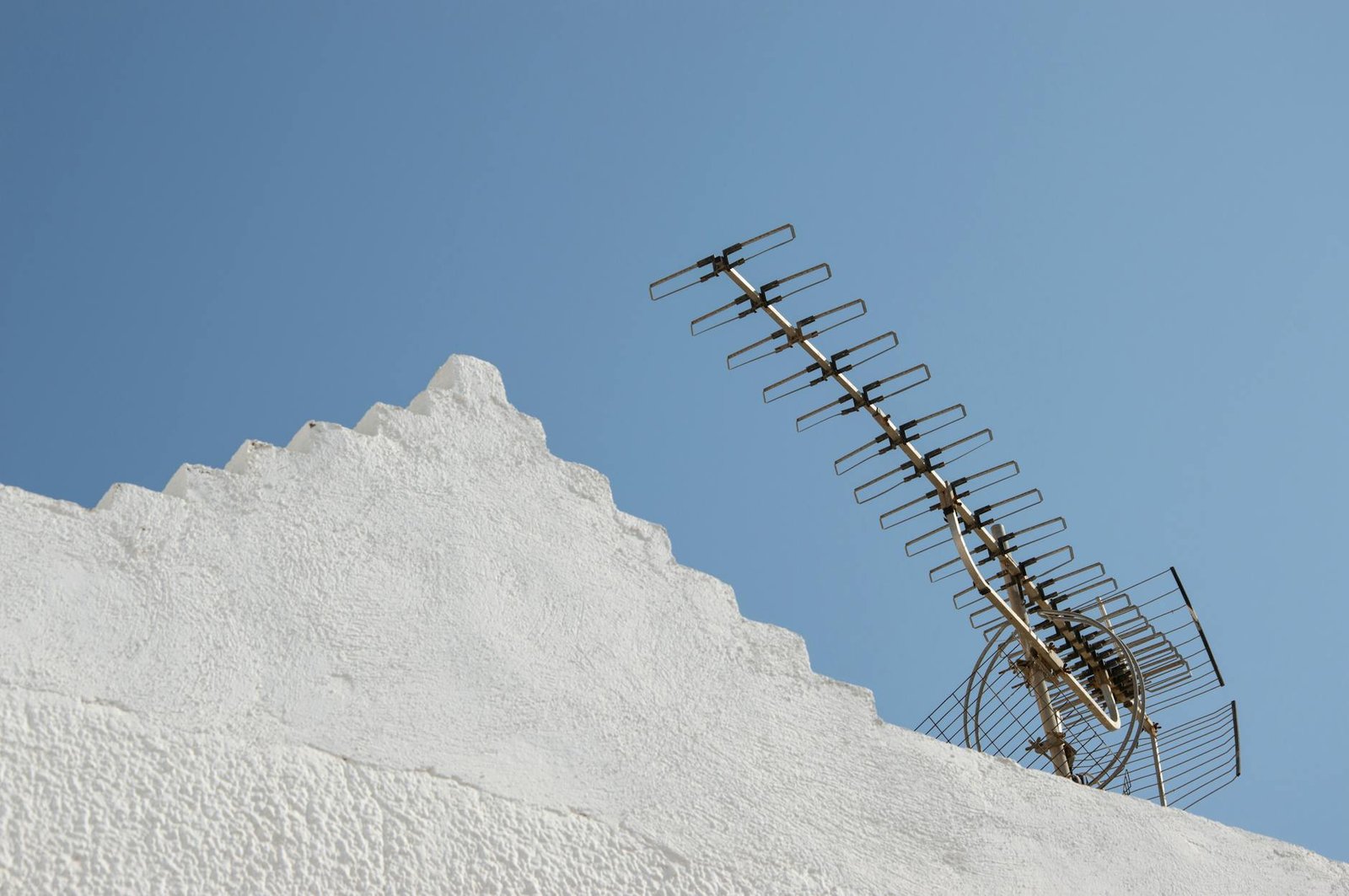
Walk into a John Lewis in 2026 and you’ll see the green Freelybadge on Hisense, Bush, Panasonic, Toshiba and selected Sharp televisions, none of which need an aerial cable to deliver BBC One, ITV1, Channel 4 or Channel 5 live. Walk into a Currys and you’ll find roughly a hundred more Freeview-only models on the same shelves. Both services carry the public service channels, both are free at the point of use, both expect a TV Licenceto watch live. The difference is the cable in the back of the set: Freeview demands an aerial socket, Freely demands a broadband router. That single hardware swap reshapes who each service is for. This Freely vs Freeview UK guide compares the two on hardware, channel coverage, recording, internet dependence, picture quality and EPG behaviour, then picks a winner per UK buyer profile.
New to IPTV?IPTV (Internet Protocol Television) streams live TV, on-demand films, and sports directly over your broadband connection — no satellite dish or cable required. Read our complete What is IPTV guide →Freely versus Freeview comparison.
Our Top 3 Recommended IPTV Services
- StreamVault — Premium global IPTV, 20,000+ channels, 4K Ultra HD. From $29.99/mo
- ApexFlow — Best for sports fans, all major leagues & PPV. From $24.99/mo
- BeamTV — Family-friendly & affordable, kids-safe content. From $7.99/mo
All three support 1, 3, 6 and 12-month plans — secure PayPal checkout.
Further Reading #
- Freely official site — supported Smart TVs and channels
- Freeview official site — UK free TV channels
What Freely actually is in 2026 #
Freely is the IP-delivered free-to-air platform built by Everyone TV — the joint venture owned by the BBC, ITV, Channel 4 and Channel 5. It launched in 2024 on Hisense and Bush sets, then widened in 2025 and 2026 to Panasonic, Toshiba, Sharp and a handful of own-brand sets. It delivers the full live PSB lineup — BBC One through BBC Four, ITV1 through ITV4, Channel 4, E4, More4, Film4, Channel 5, 5USA, 5Action — plus all four catch-up players (iPlayer, ITVX, Channel 4, My5) inside one unified EPG. Full channel and supported-set details are kept current on Freely’s official site. There is no aerial socket required: the set pulls live channels over your home broadband.
Freely is positioned as a free streaming alternative for households who can’t or don’t want to use an aerial — flats with no rooftop access, households where the aerial socket is in the wrong room, holiday homes, second TVs on long Ethernet cables. It is not a paid service. It is not, on paper, a replacement for Freeview Play; it is a different delivery mechanism for the same broadcasters’ content. Optimizing Freely vs Freeview UK remains a core benchmark across this protocol.
What is IPTV, and is Freely actually one of them? #
IPTV — internet protocol television — is the umbrella term for any live or on-demand channel that arrives at your TV through a broadband connection rather than an aerial, satellite dish or cable line. The pedantic engineering definition covers Sky Stream pucks, Virgin Stream boxes, EE TV pucks, every paid IPTV subscription on the high street, and yes — Freely. The free TV services compared question is unusual precisely because one side of it (Freely) is technically IPTV while the other (Freeview) is the last mass-market free service still riding the Crystal Palace transmitter. Most British viewers don’t notice the distinction; the BBC One picture looks the same. The plumbing differs in three ways that matter for free-TV households:
- Freely is unicast IP per device — every viewer pulls a private stream from Everyone TV’s CDN, so a flaky router takes out live BBC One the same way it takes out iPlayer.
- Freeview is broadcast — one signal radiates from a transmitter to every aerial in the catchment, immune to your Wi-Fi or your neighbour saturating the cell.
- Paid IPTV services are also unicast IP but trade a monthly fee for far wider channel libraries; for a free-TV-only household, Freely is the closest legitimate IPTV equivalent that costs nothing extra.
If you want the full primer on the underlying technology, our what is IPTV explainerwalks through unicast vs broadcast, codecs and bitrates in plain English. For a sense of how Freely compares against the dedicated Freely review UKverdict — picture, EPG, supported sets — the standalone review is the deeper read. The takeaway for the which free service is better debate is simple: you are choosing between a broadcast platform with a thirty-year track record and an IPTV platform that is two years old, both delivering the same channels.
What Freeview and Freeview Play are now #
Freeview is the over-the-air digital terrestrial television platform that’s lived on UK rooftops since 2002. It covers around 70 channels in standard definition and around 15 channels in HD on the modern Freeview HD spec. It needs a working aerial connected to the TV’s coaxial socket. The signal is broadcast from Crystal Palace, Sandy Heath, Winter Hill and the rest of the national transmitter network and reaches roughly 98.5% of UK households with reasonable terrain. Channel listings, postcode coverage checks and supported-set info are maintained on Freeview’s official UK site.
Freeview Play is the upgraded version that bolts on the catch-up players and an integrated forwards-and-backwards EPG. You scroll back seven days in the guide, hit Play, and the set jumps into iPlayer or ITVX automatically. Freeview Play is built into virtually every UK-spec smart TV sold in the past five years — Samsung, LG, Sony, Hisense, TCL, Panasonic — and into all current Freeview-branded set-top boxes from Manhattan, Bush and Humax.
Hardware — which TVs and boxes support each #
Freeview Play is the broader ecosystem by far. Any UK-spec smart TV from Samsung, LG, Sony, Hisense, TCL, Panasonic, Toshiba, Sharp or Bush manufactured since 2018 will carry Freeview Play. Older sets get plain Freeview HD via the in-built tuner. Set-top box options remain plentiful: Manhattan T3-R, Humax Aura (which doubles as a Freeview Play recorder), Bush Freeview Play boxes from £40 upwards. Aerial-fed Freeview reception is also available on PVRs from around £80 with a 500GB or 1TB drive.
Freely is narrower. The supported set list as of early 2026 covers Hisense, Bush, Panasonic, Toshiba, Sharp’s UK range and a small set of own-brand TVs sold through Argos and Tesco. Samsung, LG and Sony have not adopted Freely on their flagship sets at the time of writing — they remain Freeview Play-only for the live PSB experience. There is no current standalone Freely set-top box, although Everyone TV has signalled one may follow. If your existing TV doesn’t have Freely baked in, your only route is to buy a new Freely-branded set, or sidestep the Freely versus Freeview comparison question entirely by sticking with the aerial route. Optimizing Freely vs Freeview UK remains a core benchmark across this protocol.
Channel coverage compared #
Freeview HD’s headline lineup totals roughly 85 channels including BBC, ITV, Channel 4, Channel 5, U&Drama, U&Yesterday, U&Dave, ITVBe, 5USA, 5Action, plus the Sony Channel, Quest, Quest Red, Blaze, Forces TV (where still available), and the news ecosystem (BBC News, Sky News, GB News, TalkTV). Local TV variants (London Live, NOTTS TV, Manchester’s That’s Manchester) appear depending on transmitter region.
Freely launched with the four PSB families and has been broadening monthly. As of early 2026 it carries BBC One, BBC Two, BBC Three, BBC Four, BBC News, BBC Parliament, all the BBC nations and regions, ITV1 (with regional variants), ITV2, ITV3, ITV4, ITVBe, Channel 4, E4, More4, Film4, 4Music, Channel 5, 5USA, 5Action, 5Star, plus a smaller set of commercial channels — U&Drama, U&Yesterday and a few more — that have signed onto the platform. The total live channel count sits in the low 30s. Some niche cable-style commercial channels available on Freeview have not yet joined Freely.
Live + on-demand experience — the EPG difference #
Freeview Play’s EPG is the mature experience — a numbered grid running from channel 1 to channel 800-something, navigable forwards and backwards, with the catch-up apps appearing as you reverse-scroll past the green now-line. The information density is high, the channel logos are familiar, and the muscle memory works for anyone who’s watched UK TV in the past two decades. For the free TV services compared comparison shopper, the EPG is often the deciding factor that arguments about hardware and bitrate never quite settle.
Freely’s EPG is built from scratch on a unified streaming-first design. Live channels and on-demand series sit in the same surface; you can scroll back through the schedule and start a show seven days ago without leaving the EPG, much like Freeview Play, but you can also discover content by collection (BBC drama, ITV reality, Channel 4 documentaries) without thinking about which channel originated it. For new viewers it is more intuitive. For long-time UK TV watchers it can feel less anchored, because the channel-number muscle memory doesn’t translate.
Recording — where Freeview still wins #
Freeview’s recording story is mature. A Humax Aura, a Manhattan T3-R or a similar PVR records two or three channels simultaneously to a 500GB or 1TB internal drive. You schedule from the EPG, the recording survives the broadcast going off-air, and you can transfer files to USB on certain models. Series link works. Live pause works. In the which free service is better head-to-head, recording is the cleanest single-line victory the older platform still owns outright.
Freely has no equivalent native recorder. The intent is that catch-up players replace recording — you watch on iPlayer, ITVX, Channel 4 or My5 instead of a personal disk. For most modern usage that works: BBC keeps iPlayer content for around 12 months on average and many series indefinitely; ITVX keeps the bulk of its archive with adverts. The gap is for content that doesn’t reach the catch-up players (rare on PSBs but real on niche commercial channels), live sports if added, and household members who want to skip ads aggressively. If ‘I record Coronation Street and watch it Sunday morning while skipping ads’ describes you, Freeview keeps you happier. Optimizing Freely vs Freeview UK remains a core benchmark across this protocol.
Internet dependence — the catch with Freely #
Freeview is internet-independent for live TV. Catch-up needs broadband, but live channels keep working through power cuts that take out your router (assuming the TV has a battery backup, which most don’t), through ISP outages, through Wi-Fi disconnections. The signal arrives via aerial regardless of your internet status.
Freely depends on broadband for everything. A router outage takes out live TV as well as catch-up. Minimum recommended speed is around 5 Mbps for SD, 8 Mbps for HD, with a stable, low-jitter connection. On a flaky FTTC line during peak hours, picture artefacts and rebuffering happen. On a Full Fibre line at 100 Mbps and above, the experience is essentially indistinguishable from Freeview HD. The catch is that the cheapest broadband packages (sub-30 Mbps FTTC) are exactly the ones most likely to struggle when the household is also streaming Netflix on a tablet and gaming online — a real-world Freely versus Freeview comparison reliability gap that postcode and ISP dictate more than the platforms themselves.
Picture quality and Freeview HD vs Freely streams #
Freeview HD broadcasts BBC One, BBC Two, ITV1, Channel 4 and Channel 5 in 1080i HD at roughly 7 to 10 Mbps depending on transmitter and time of day. The picture on a properly aligned aerial is sharp, consistent and free of buffering. SD channels look softer than they did in 2010 because TV panels have grown — a 65-inch screen is unforgiving on a 720×576 source — but the HD lineup holds up.
Freely streams BBC One, BBC Two, ITV1 and the rest in 1080p adaptive bitrate up to about 8 Mbps. On a strong connection the picture matches Freeview HD on a side-by-side and occasionally exceeds it because the streaming codec is more modern (H.264 still, but with adaptive streaming overhead). The vulnerability is the connection: a momentary dip can cause Freely to step down a quality rung, and you’ll notice it on football and fast-cut adverts. Neither service offers 4K live yet — that remains a limitation of the public-service free-to-air ecosystem.
Who should still buy Freeview #
Households with a working rooftop aerial, a TV less than five years old, and a habit of recording soaps or panel shows: stay on Freeview Play. The recording flexibility, the channel-number muscle memory, and the independence from broadband are real advantages. There is no upgrade reason to spend money replacing a working setup unless your aerial actually fails.
Rural households where broadband is sub-30 Mbps and the aerial pulls a strong signal: Freeview is the more reliable picture. Freely’s adaptive bitrate downsampling on a slow line is exactly the wrong trade-off for the household that already gets clean over-the-air HD. The same logic applies in caravan parks where broadband is shared and over-subscribed. Optimizing Freely vs Freeview UK remains a core benchmark across this protocol.
Who should pick a Freely TV instead #
Anyone moving into a new-build flat with no aerial socket, particularly in central London, Manchester, Bristol, Birmingham or any high-density development built since 2018, where freeholders increasingly don’t install rooftop aerials. Freely lets you watch live BBC One the day you move in, with no aerial install quote and no shared-aerial faff.
Households buying a new TV in 2026 anyway, on the Hisense, Panasonic, Bush, Toshiba or Sharp lineup. Freely is included; it costs nothing extra; it works alongside Freeview HD if you do also have an aerial connected, so you get both services on the same set. There is no reason to actively reject a Freely TV unless you are deliberately buying a Samsung or LG flagship — both of which still give you Freeview Play, so you lose only the IP-delivered live PSB feature. For households leaving pay-TV behind altogether, the free TV services compared answer often runs alongside a wider rethink covered in our cancel Sky TV cheaper alternativesguide.
Verdict by buyer profile #
Aerial-equipped house, working setup, no plans to move: Freeview Play, no spend required. Replace the PVR if it’s tired, otherwise carry on.
New-build flat, no aerial socket, decent broadband: Freely TV. Hisense’s mid-range Freely sets clear £350 for a 43-inch panel and require nothing else.
Buying a new TV in 2026 anyway, mixed habits: Freely TV with the aerial connected too — get the best of both, and the which free service is better question dissolves the moment both inputs are wired up.
Rural household, slow broadband, strong aerial signal: stay Freeview. Don’t replace a working aerial setup with an IP-only Freely set. The Freely versus Freeview comparison answer in this profile is unambiguous, and it doesn’t change the moment you add a faster broadband line either, because the aerial picture is already free of the bitrate compromises Freely will impose at peak hours. Optimizing Freely vs Freeview UK remains a core benchmark across this protocol.
Frequently Asked Questions #
Do I need an aerial for Freely? #
No. The whole point of Freely is to deliver live BBC, ITV, Channel 4 and Channel 5 over your home broadband, with no aerial cable required. Plug the TV into Wi-Fi or Ethernet, finish the setup, and the live PSB channels appear in the unified EPG. The minimum recommended broadband is around 8 Mbps for HD, with a stable connection. If your TV happens to also have an aerial connected, both services run side by side without conflict.
Is Freely better than Freeview Play? #
Different, not better. Freeview Play has the wider channel selection, mature recording, and zero internet dependence. Freely has a more modern unified EPG, no aerial requirement, and a streaming-first interface. For a household with a working aerial and broadband under 30 Mbps, Freeview Play is the safer pick. For a household with no aerial socket and Full Fibre broadband, Freely is the obvious answer. Most new TVs from the supported brands carry both, which sidesteps the free TV services compared question entirely.
Does Freely work on old TVs? #
Not natively. Freely is built into the firmware of supported sets — it isn’t a downloadable app. Currently Hisense, Bush, Panasonic, Toshiba, Sharp and a few own-brand UK TVs ship with it. Samsung and LG have not adopted Freely at the time of writing. There is no standalone Freely set-top box yet, so older TVs cannot get the integrated Freely experience even though individual catch-up apps (iPlayer, ITVX, etc.) are still available on most smart TVs.
Can I record with Freely? #
There is no native recording on Freely. The platform’s design philosophy is that catch-up players (iPlayer, ITVX, Channel 4, My5) replace recording for almost all PSB content, since most shows are available on demand for at least 30 days and many for a year or more. If you specifically want to record live and skip ads in a tape-recorder sense, a Freeview PVR like the Humax Aura is still the best route, and you can run it alongside a Freely TV on the same set.
Will Freeview be switched off? #
Not in the immediate term. The current public commitment from government and broadcasters is to keep digital terrestrial television active until at least 2034, with a review point in the late 2020s. The aerial-based service has roughly 70% UK household reach as a primary platform and around 95% as a secondary or backup, so a hard switch-off would leave too many households without television. Freely is positioned as the long-term replacement, but the migration is being run as a slow, voluntary transition rather than a forced sunset.
Related reading #
- Freely review UK — the standalone verdict on picture, EPG and supported sets
- Cheapest way to watch TV in the UK in 2026
- How to cancel Sky TV and the cheaper alternatives that replace it
- TV Licence rules for streaming-only households
- Best streaming device UK 2026 — Firestick, Chromecast, Apple TV compared
- Sky Stream review UK — the paid puck alternative explained
- NOW TV review UK — Sky channels without the dish
Disclosure: this article is editorially independent. Channel availability and supported TV models were correct at time of writing and are subject to change at freely.co.uk and freeview.co.uk. We may earn a commission on some links at no extra cost to you. Optimizing Freely vs Freeview UK remains a core benchmark across this protocol.
Related Guides #
Quick Navigation & Essential UK IPTV Links #
Discover our official services, subscription options, and streaming guides to optimize your 4K viewing experience:
Explore Topic Cluster & Related Knowledgebase (Silo Index)
Access verified sibling guides and core pillar resources from our streaming and setup cluster:



- 4K IPTV UK 2026 — Best Subscriptions for Ultra-HD Streaming
- How to Setup IPTV on Philips Android TV Ambilight 4K 2026…
- Is IPTV Legal in the UK? 2026 Legal Status Explained
- Best IPTV Provider for Sky Sports & TNT Sports 4K UH…
- Best IPTV Player for Samsung Smart TV Tizen UK 2026 : 4K …
- Cancel Sky TV: Cheaper UK Alternatives in 2026